“A forest is much more than what you see,” says ecologist Suzanne Simard. Her 30 years of research in Canadian forests have led to an astounding discovery — trees talk, often and over vast distances. Learn more about the harmonious yet complicated social lives of trees and prepare to see the natural world with new eyes
Clearly Enid Blyton’s ‘Magic Faraway Tree’ changed me forever. I loved the enchantment of it all. When I was teaching I often used the metaphor of tree roots, particularly with younger students, to convey the notion of drawing from deep within. In writing sessions I have people sit outside with a tree for at least half an hour, amble down amongst the roots and write or draw stream of consciousness thoughts.
There is much to learned about creativity, resilience and self healing from trees! Trees are super co-operators! Gather together the art and writing supplies and get out amid a stand of trees. Check out the Golden Seed Grove for some inspiration. View the Tree of Contemplative practice; meditate by sitting in the arms of a tree! Go out and take the time to listen to what the trees have to tell you.
Resolve to take action to protect these special tree people! Draw attention to the need to save old growth forest and promote regeneration.


 In this international bestseller, forester and author Peter Wohlleben convincingly makes the case that, yes, the forest is a social network. He draws on groundbreaking scientific discoveries to describe how trees are like human families- tree parents live together with their children, communicate with them, support them as they grow, share nutrients with those who are sick or struggling, and even warn each other of impending dangers. Wohlleben also shares his deep love of woods and forests, explaining the amazing processes of life, death, and regeneration he has observed in his woodland. After you have read The Hidden Life of Trees, a walk in the woods will never be the same again.


 The Forest Creek Geo Maze is constructed from eight concentric circles of rocks. The six types of rocks are representative of the main periods of geological activity in the goldfields region. The oldest rocks are placed around the outer circle and the younger rocks are in the centre.


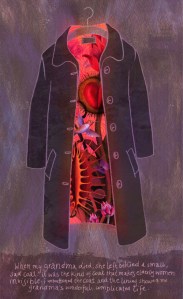 I have always been fascinated by Clarissa Pinkola Estes idea of making a full length scapecoat to detail one’s scars in painting, writing, with all manner of things pinned and stitched inside. It is the perfect place to pin all that one has endured, “all the insults, the slurs, all the traumas, all the wounds”. Such a coat is a way of visually portraying one’s endurance and the victory of still standing tall.


 This old yellow box has nothing to say to me about the insanity of the gold fever that bought hoards here and even less about the people who lived in the nearby ruins. But maybe, if I come visiting often enough, he might just reveal something about how to live alone through times of loss and change.


 A working dog is a canine working animal, i.e., a type of dog that is not merely a pet but learns and performs tasks to assist and/or entertain its human companions, or a breed of such origin. In Australia and New Zealand, a working dog is one which has been trained to work livestock, irrespective of its breeding. Truffle hunting dogs, for example, are

 This lot are reputed to be skilled at herding reindeer but with few reindeer in these parts they do not have to work – unless you count maintaining vigilant watch of property boundaries as work. No one gets onto the property without me knowing and they do provide companionship and even comfort when they perceive it is needed!


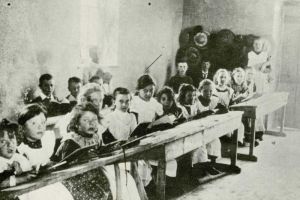


 On 28 January 1852, Gold Commissioner William Henry Wright was one of nearly 200 men who were assigned or affirmed as Territorial Magistrates for Victoria. Not long after, he took control of the Mount Alexander diggings and set up a government camp on Forest Street near the junction of Barker and Forest Creeks (today’s Camp Reserve).


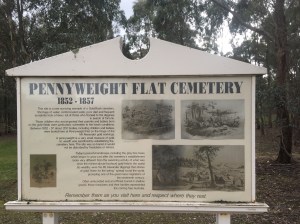 In 1852, on a barren piece of land that was of no use to gold miners or fossickers, a cemetery for the deceased children of the Castlemaine goldfields was set aside. Located within the Castlemaine Diggings National Heritage Park is Pennyweight Flat Children’s Cemetery. A pennyweight is a very small measure of gold.


 While Waiting For Godot