Life While-You-Wait. Performance without rehearsal. Body without alterations. Head without premeditation.
The seed I planted, when I began working on the idea of what I would do while I was Waiting for Godot, was planted back in November 2014. At that time I established a small visual journal and undertook to draw a donkey, with a raven companion, each day. Like me, they were waiting for Godot to provide some inspiration. I maintained the practice for three months, adding clippings and poems by poets such as Mary Oliver to my journal.
Then I got distracted! I enrolled to do a Masters of Social Work at Monash University and my notebook, pencils and the idea lay idle.
But things have a way of growing by delay and after a daunting first semester last year I actively established this site. A series of creative projects have brought me back to my notebook. I was surprised by how a sense of fun dripped out of my drawings.
I have begun to draw again, in conjunction with the still-hunting that Ted Andrews inspired me to undertake! I do not need to know where any of this is going! All I know is that the creative spirit is growing as vigorously as Jack’s beanstalk.
Over 52 weeks I will be learning all about how to live and work creatively. My teachers are Aussie birds and animals. It is week six and the creative force has produced the Echidna to build on the lessons that Australian birds, animals and habitat have been initiating.
Echidna teaches us the value of focusing on the little things. Paying attention to the small details can make the bigger picture that much more successful and nourishing. Take the time to look closely at the matters around you.
As well as looking at the little things, there is something in your life at the moment which requires further investigation. When Echidna is threatened they did deep into the ground. It’s time to dig a little deeper. This might be through research, conversation, chasing up leads or simply meditating or spending time ruminating on an issue until ‘it’ comes to you. Echidna energy is valuable for helping us to scrutinise ideas that – up until now have not been fully formed.
Echidna gives you the tools and power to not only look beneath the surface but tunnel deeply into your problems and thoughts and find nourishment from what you find there.
Echidna comes into our lives to show us what an asset being stubborn can be! Dig your claws in, brace your spines against your threshold, and protect yourself, your family, your ideas and your creations. When you let echidna teach you nourishing stubbornness, you also access stability. Echidna teaches you to remain grounded at all times, even when you are sailing through the lands of your creative imagination, coming up with new ideas and plans to make your life happier and healthier.
Over 52 weeks I will be learning all about how to live and work creatively. My teachers are Aussie birds and animals. It is week six and the creative force has produced the Echidna to build on the lessons that Australian birds, animals and habitat have been initiating.
Echidna has come urging me NOT to be like him. He raises his spikes when someone gets too close and I have been guilty, not only of keeping people at arm’s length but of raising my spikes when faced with criticism. I have a well-established armoury to defend myself! Echidna says ‘get back or I will spike you’; ‘get out of my space’! He is so encased in his comfort zone that he won’t let anyone in. When we don’t walk outside those self-imposed boundaries we don’t grow.
Rather than rolling into a tight ball when the critic tells me that what I am doing is self-indulgent I am checking out how it feels to be self-indulgent and self-compassionate! I am also opening the barrier to my property a little! I posted on FB suggesting that cooks or families might like some fresh fruit from my trees! Some lovely people have responded, each offering other fruit in return. Given what the price of figs has been it will be a treat to receive some freshly grown ones.
As I engage in Still-hunting, suddenly this area seems even more interesting, almost indulgent! Yesterday I found my way to a historic cemetery and sat under large oak trees contemplating Mt Franklin, which lay within the frame of my view. A brown rabbit ran by but I chose not to try to follow it. Instead, because Echidna has been urging me to step well outside the boundaries I have unconsciously set for myself, I indulged in quiet time in the shade and contemplated going inside one of these trees. I made a note, in the small travel journal that had lain unused, of other places I might explore.
Read about Zen and the Art of Team Blogging, a testimony to what can be achieved when we break down the barriers and work collaboratively.
Piggiebillah the Echidna was once a man. When he grew old, so old that all his friends had died, he lived with men who had been boys when he was middle-aged. They were all strong and tireless, and able to hunt all through the hot sunny hours of the day, and to travel long distances in search of food, but Piggiebillah was too old to take his part in providing food for the tribe.
No-one gave him anything to eat, and it was surprising that he remained so well. As he grew older he seemed better nourished than anyone else. In fact it was so very surprising that some of the people became suspicious and kept a close watch on him. After some time they discovered something that Piggiebillah had kept a secret to himself for years.
When he left the camp one morning, he was followed, and it was seen that he went to a rock at some distance from the encampment, and hid in its shadow. The watchers peered at him from behind bushes, wondering what he was waiting for. They soon found out. A young woman came along the path. Piggiebillah sprang out, and before anyone could move or give a shout of warning, he plunged his spear into her body. The old man dragged her off the track, ate her limbs, and hid the rest of her body away for a later meal.
The disappearance of many people of their tribe, and of visitors who were expected and never arrived, was at last explained. A secret meeting was held and it was unanimously decided that Piggiebillah must be killed. He was so active, in spite of his great age, that he had to be taken unawares.
They waited until there was a dark night without a moon. The old man was lying at some distance away from the fire. The men gathered silently round him. He was sleeping on his back with his mouth shut to prevent his spirit from wandering. He moved in his sleep and murmured, ‘I hear the butterflies stamping in the grass.’
While he dreamed of butterflies the men drove their spears into his body. Piggiebillah groaned as they beat him with their clubs. Bone after bone in his body and arms and legs was broken, and at last the terrible cannibal lay still.
His wife was looking on in horror. She hit her head with her digging stick until the blood ran over her breast. Her name was Guineeboo, and when she fled from the scene she became Guineeboo, the Red-breasted Robin.
The men crowded round the fire, laughing and chattering over their easy victory. But Piggiebillah was not dead. He dragged himself painfully into the deeper shadows until he came to the burrow of Trapdoor Spider, Murga Muggai. He fell down the hole, and stayed at the bottom until his wounds were healed.
The one thing he could not do was to pull the spears out of his body, nor did the bones in his broken limbs knit together. Nobody recognised Piggiebillah when he came out into the daylight again. He crawled on all fours, with his broken legs splayed out, and the spears were a bristling forest on his back. For food he dug with his hands, and had to be satisfied with ants and other insects, and scraps of food.
Piggiebillah had turned into an Echidna, the little animal that scratches for ants because he cannot eat other food, and burrows underground to escape from his enemies.
Today I was called upon to drive up to Dog Rocks on nearby Mount Alexander to still-observe. The call was quite insistent! I considered finding a space closer to home but the voice calling me would not be silenced.
Dog Rocks are near the peak of Mt Alexander. They comprise of huge, picturesque granite outcrops. Over the years, they’ve become a favourite stopover landmark for bushwalkers and a popular spot for climbers and artists. Rock climbers were working the main area so I clambered into a quieter space, hoping that a ‘significant’ creature would make its presence felt. However, only the Australian Blowflies buzzed noisily around me as I examined a vulva like a passageway leading through an outcrop.
I quickly decided that blowflies are far from insignificant. They do make their presence felt! Blowflies have been deemed to be vehicles of death, decay and destruction; envoys of evil, sin and pestilence by the Christians. However, some African tribes celebrate a Fly-god, with the fly revered as an embodiment of the soul. As such flies are never killed.
I have been guilty of being homicidal with blowflies but I was rehabilitated after vomiting repeatedly when cleaning up a mass of dead flies seven years ago. Now I quietly encourage them to leave the premises; refrain from having toxic sprays in the house.
As I contemplated the blowflies I thought of the small house fly who has quite literally been the ‘fly on the wall’over recent days! This small creature has been persistently invading my space, eavesdropping, circling around my fingers as I type, soaking up knowledge, urging me to develop my senses and become more observant.
Let’s face it! It is almost impossible to dissuade flies from persistently swarming about us when we are outdoors. The presence of flies affirms the quick and abrupt changes in my thoughts, emotions and endeavours. Rapid changes in all aspects of my life are currently taking place and the ever-persistent fly is reminding me not to give up. It is persistence which will enable me to reach goals and bear fruit sooner than later.
Even if it means annoying others or being selfish for a while I do have the ability to accomplish my goals. My current goals are to trust the process and complete the final year of my Masters of Social Work; spend 52 weeks learning from Australian birds and animals. Still hunting is a part of the 52 week process! I am carefully recording my observations.
As I sat at Dog Rocks I noted the call of the Kookaburra and the footfall of rock climbers clambering to find places to test their skills. But it was the brown butterflies who danced around me and who led me to find a small magic circle, formed by ancient granite.
Butterfly seemed to be asking me to go on with the clearance I have been facing, embrace changes in my environment and to work with my emotional body. The energy supporting a physical transformation of energy was all about me. It is time to release any expectations and simply allow change to flow through and around me.
Over 52 weeks I will be learning all about how to live and work creatively. My teachers are Aussie birds and animals. It is week five and the creative force has produced the Pelican to build on the lessons that Australian birds, animals and habitat are initiating.
After watching a Pelican, patiently perched on its nest at St Leonard’s, Victoria, on the Australia Day long weekend I have been encouraged to emulate this bird. Ted Andrews talks about Still-hunting in this classic book, Animal-Wise.
“Still-hunting was practised in shaman traditions all over the world. Its primary purpose is to observe and learn. The still-hunter would go to a place he or she knew well or felt attracted to, whether a hillside, a meadow, a forest or a pond. There the individual would wait patiently until everything returned to normal. Then the still-hunter opens themselves to learn from the natural world.”
A google search reveals that this term is also used by actual hunters who treat the killing of animals as a sport! As a consequence, I will be using the term still-observing!
Perched on the nest my pelican, photographed here, appeared to be still-observing!
Become a still-observer!
Let the place choose you! It may be your own backyard!
Allow intuition to guide you to a place.
Upon arriving in the place become as unobtrusive to the environment as possible.
Remain very still and observe. Let the world go around you as if it were not there.
Feel and imagine yourself as a part of the environment and natural surroundings
Quietly observe the sounds! Pay attention to small detail.
Over 52 weeks I will be learning all about how to live and work creatively. My teachers are Aussie birds and animals. It is week five and the creative force has produced the Pelican to build on the lessons that Australian birds, animals and habitat are initiating.
The elegant pelican animal totem is definitely an opportunist with style and finesse. In the wild, these large-billed birds perch themselves in the most advantageous position before swooping in to catch their prey. They wait patiently and focus intently, striking at the most perfect moment.
Pelican spirit guides float into our awareness to encourage us to do the same. In order to experience the benefits of opportunities, we must be proactive. We cannot just sit idly and wait for things to come our way all of the time. Each of us needs to get out there and place ourselves in circumstances that will yield benefits. Put yourself in a position that will enable you to utilize skills and resources.
In addition to resourcefulness, the pelican spiritual totem commonly symbolizes social responsibility and active attributes, such as social, teamwork, charity, generosity and friendliness. This is because these birds are highly social and reliant upon their groups. Hunting is a group effort, in which many members of the flock work together to gain abundance. Pelicans encourage us to develop friendly, caring, and supportive relationships with members of our own communities, as well.
Are you intent upon a goal, or some treasure you desire? Do like the pelican does. Perch yourself in an advantageous position, and observe the resources that come your way.
Over 52 weeks I will be learning all about how to live and work creatively. My teachers are Aussie birds and animals. It is week five and the creative force has produced the Pelican to build on the lessons that Australian birds, animals and habitat are initiating.
Despite their size pelicans are light and buoyant. They can float like a schooner. A pelican in flight can quite suddenly plummet into the water and then pop up to the surface. Its system of air sacs under the skin makes it unsinkable.
Symbolically this hints at the benefits of buoyancy during tough times. The pelican is teaching that no matter how difficult the creative process may be, no matter how much we may plunge when we are knocked back or our critic’s voice is loud, we can pop back up to the surface. The Pelican holds the knowledge of how to rise above criticism.
Pelicans, in spite of their lightness, sometimes have a difficult time taking off from the water. Still, they do manage, and again we can see the correspondence to freeing oneself from that which would weigh us down.
The water is a symbol of emotions that may weigh us down. The pelican teaches how not to be overcome by them.
Here are some facts about density and its effect on buoyancy! How can we apply this principle to the creative process? How do you stop your spirits from sinking under the weight of self-doubt and criticism from that inner voice that is quick to pass judgement?
Over 52 weeks I will be learning all about how to live and work creatively. My teachers are Aussie birds and animals. It is week four and the creative force has produced the Possum to build on the lessons that Australian birds, animals and habitat are initiating.
Janganpa jukurrpa (Possum) travels all over Warlpiri country. Janganpa are animals that often nest in hollows of white gum trees (Wapunungku).
This story comes from a big hill called Mawurrji west of Yuendumu and north of Pikilyi (Vaughan Spring).
The “E” shape figures are possum tracks and wavy lines are the trail their tails left on the ground. The concentric circles are the trees in which the possums live. Men and women would go at night for Janganpa hunting. Source: POSSUM DREAMING (JANGANPA JUKURRPA)
Possum is calling upon us to draw a map of the paths we have walked, marking where we have left our track marks. This is a great way to prepare for memoir writing!
The Djargurd Wurrong possum skin cloak was worn by Gunditjmara Elder Ivan Couzens at the Opening Ceremony of the 2006 Melbourne Commonwealth Games. The cloak was made by Vicki Couzens and Yarran, Jarrah, Marlee, Niyoka and Kirrae Bundle. Gunditjmara, Western District of Victoria. River people.
A dreaming story tells of a confrontation between the Rock Wallaby Men from Port Agusta and the northern Possum Men. The Possum Men were conducting important ceremonies when the Rock Wallabies burst in and a fight broke out. Eventually, the two sides called an end to the fighting and agreed to exchange the important ceremonial knowledge. They established a big corroboree camp and the country surrounding was known as good possum country before the arrival of the white settlers. In fact, Aboriginal law completely protects some of these sites from hunting, even during drought, in order to ensure the survival of their food species. Unfortunately, possums have almost completely disappeared from this region although they are still very important in the dreaming songs and rituals performed today. Source
Possum has come to remind us that no one can own the stars; that the creative force is responsive when we share and take active steps to protect the source of creativity.
The Djargurd Wurrong possum skin cloak, worn by Gunditjmara Elder Ivan Couzens at the Opening Ceremony of the 2006 Melbourne Commonwealth Games, is an example of what happens when artistic people work collaboratively, rather than keeping their important ceremonial knowledge to themselves. Elder, Ivan Couzens, and others talk about how the cloak helps Aboriginals understand who they are.
The tradition of using possum skins for the making of cloaks, waistbands, belts, armbands and headbands was practised by Aboriginal people across eastern Australia.
One of the earliest documented accounts of a possum skin cloak is from Governor Macquarie. In his journal on 10 May 1815 (Bathurst), he recounts that three Wiradjuri warriors, led by Windradyne, visited him and gifts were exchanged. Macquarie gave Windradyne a tomahawk and a piece of yellow cloth; in return, he received a possum skin cloak.
One example of cloak-making from this region is held in the Smithsonian Institute (Washington, DC, USA). Known as the Hunter River Cloak, it was collected during an expedition in the mid 1800s by American explorer Charles Wilkes. It features four rows of six rectangular pelts sewn on the back, edge to edge, with very fine overhand stitching of corded sinew. The fur has been left on and the skin side is completely covered with large diamond-shaped designs made by scraping up a thin layer of the skin so that it stands up in a little curl.3
Traditionally, cloaks were used for ceremonial purposes: in dance, drumming, initiation rites and also in daily life. They were primarily worn as a means of protection from winter conditions, but also used as a shelter from heat and wet weather and to carry babies and small children.
A local example of how valuable the cloaks were in trade is suggested by stories of the Darkinjung nation trading them with inland tribes in exchange for spears and woomeras. In the Dandenong region of Victoria, the trade value of a cloak was said to be worth a greenstone axe. They were also given as peace and marriage offerings.
Possum skin cloaks were created for individuals when they were born and were added to throughout their lives. The intricate designs and ochre decorations were either made by the individual or by others, depending on the design and the purpose for which they were being added.
This practice reminded of a gift that I was given when I visited the Isle of Ancestors. The Isle of Ancestors is a part of the Lemurian Archipelego, a fantasy world that I created during the hey days of the Soul Food Cafe. It is well worth a visit! Travellers have left rich stories of their meeting with their ancestors at this revered island.
At a point when I was feeling quite low I hitched a ride with the Ferrywoman and visited the sanctuary on the Isle of Ancestors. It was a moving experience as I met all my grandmothers. Before insisting that I return to the world I had come from, they gave me was a cloak filled with raven feathers to wear and provide comfort whenever I felt low.
This cloak held the life stories of the ancestors who walked before me and upon whose shoulders I now stand.
In her iconic book ‘Women Who Run With The Wolves’ Clarissa Pinkola Estes talks extensively about the importance of Soulskins. In her chapter, Homing: Returning to Oneself she talks about how women who have lost their pelt, lose their protections, their warmth, their early warning system and most devastatingly, their instinctual sight.
Possum urges us to see our life as being built upon the foundation of our ancestors; to wrap ourselves within a cloak and find anchorage with our ancestors.
Possum urges the creative to take the time to use some of the ways suggested in the linked articles or to make a metaphorical coat to record the journey. Actively taking tangible steps to honour our ancestors provides a foundation upon which great things can be initiated.
Personally, I found that I viewed my potential differently when I pulled the cloak I had been given out of the cupboard and celebrated wearing it on a daily basis.
This morning when I was out with the dogs, Archie alerted us to the fact that there was a possum tucked in the branches of one of the shade trees. It took us a moment to spy the frightened, frozen creature whose bright eyes seemed to be looking far far away. Given the fact that we were anticipating that temperatures would rise to 42c our primary concern was that this creature and its access to water. I have been filling vessels for the bird life at my house but with no tap in sight, there was little we could do.
Possum medicine uses a great deal of strategy. Possums are well-known for one of their tricks. These small animals are amongst a group of animals who have the capacity to play dead when predators are near. This way they trick other, larger animals, that they are dead and then attack them or avoid them after they give up on the hunt. This trick helps possums to survive in often dangerous habitats.
Despite idleness being dammed as slothfulness, as one of the seven deadly sins, inactivity plays a perfect role in human life! When we are idle we are actually keeping up a valuable tradition. There are many advantages to inaction! For a start, immobility conserves energy. A half an hour siesta can ward off coronary disease. Plato tells us that Socrates stood still for nearly 24 hours while ruminating on some particularly intractable problems.
Most people would recoil at the idea of doing this but they would be wise to learn from a possum. Sometimes we need to go into a torpor and not think about anything much. Sometimes we need to rest our brains and replenish, in readiness to receive messages from the creator and enjoy another creative spurt.
In Signs of Love from Heaven Above, Liz Winter explains that our angels and guides are with us all the time if we just care to look. In this article she describes how a lorikeet kissied her back to life and bought her into the present moment. She saw the lorikeet as a sign, a sign of love from Spirit. The Lorikeet seemed to be telling her to look at the beauty around her, look at where she was in that moment. She felt that the bird reminded her that she was not alone.
Loneliness is the elephant in the room for many creative people. Creating can feel lonely even when you are surrounded by others. Paradoxically, it is creating that is a salve to this sense of loneliness.
If you want to be an artist you need to understand about the difference between aloneness and loneliness. Lorikeet reminds us that we do all have our personal Spirit Allies, ready and waiting to serve us. We only have to rally them for support. Their reward is the joy in our heart. We do not have to feel alone. We do not need to be shy about the Spirit World. We can talk to our guides, unload on them and ask for signs. They are there to help.
Even if it seems to be flitting from one place to another Lorikeet will listen today!
Lorikeets are full of silliness and humour, and they are also inquisitive about their surroundings. These comical birds remind the writer and artist to be expressive and bring colour, humour and light into their work. Lorikeet has drawn me to examine Expressive Arts. Expressive Arts and Art Therapy are creative therapies. The concept of expressive art resonates for me because it honours the process, rather than the final product.
With the arrival of Lorikett I decided that this 52-week project is an expressive art project. I am unashamedly doing this for myself. Committing to 52 weeks is huge and it represents a major shift for me to be genuinely creating FOR MYSELF and FOR THE CREATIVE SPIRIT. I do not actually care if many people engage or follow what I am doing! I am interested in observing and researching the process of being responsive to and feeding the creative spirit.
Art therapy can be a great way to relax. Consider these exercises if you’re looking to feel a little more laid back.
Paint to music. Letting your creativity flow in response to music is a great way to let out feelings and just relax.
Make a scribble drawing. With this activity, you’ll turn a simple scribble into something beautiful, using line, color and your creativity.
Finger paint. Finger painting isn’t just fun for kids– adults can enjoy it as well. Get your hands messy and really have fun spreading paint around.
Make a mandala. Whether you use the traditional sand or draw one on your own, this meditative symbol can easily help you to loosen up.
Draw with your eyes closed. Not being able to see what you are drawing intensifies fluidity, intuition, touch and sensitivity.
Draw something HUGE. Getting your body involved and moving around can help release emotion as you’re drawing.
Use color blocks. Colors often come with a lot of emotions attached. Choose several paint chips to work with and collage, paint and glue until you’ve created a colorful masterpiece.
Let yourself be free. Don’t allow yourself to judge your work. If you think your paintings are too tight and controlled, this collection of tips and techniques to try should help you work in a looser style.
Draw in sand. Like a Zen garden, this activity will have you drawing shapes and scenes in the sand, which can be immensely relaxing and a great way to clear your mind.
Make a zentangle. These fun little drawings are a great tool for letting go and helping reduce stress.
Color in a design. Sometimes, the simple act of coloring can be a great way to relax. Find a coloring book or use this mandala for coloring.
Draw outside. Working en plein air can be a fun way to relax and get in touch with nature while you’re working on art.
Perhaps I will get back to drawing a donkey and a raven a day!
Caged Bird By Maya Angelou was first published in her book, “Shaker, Why Don’t You Sing?” in 1983. The poem is a Metaphor illustrating the differences between African-Americans and Whites during the civil rights era. The author, a black who grew up in the South during this era, is expressing her feelings at the discrimination she faced during her life. Her first autobiography published in 1970 is titled, “I Know Why the Caged Bird Sings”
Flying Free by Heather Blakey 2004
Angelou’s poem, Caged Bird, speaks to many who have known what it is to be caged, to have their wings clipped and struggle to leave the cage even when the door is opened. Over the years I have found that many creative people have had their wings clipped by the inner critic.
The inner critic or “critical inner voice” is a concept used in popular psychology and psychotherapy to refer to a subpersonality that judges and demeans a person. The inner critic is usually experienced as an inner voice attacking a person, saying that he or she is bad, wrong, inadequate, worthless, guilty, and so on. It feeds on the words of some teachers, parents and other societal influences.
When I slipped through the portal into the imaginary world of Lemuria I found a world where I could become a bird and float on the back of the Lemurian breezes, dip my golden wings and claim the sky as mine. It was a glorious sense of freedom! More recently I have collected old bird cages and leave them, with doors wide open, scattered throughout the garden.
The free bird leaps
on the back of the wind
and floats downstream
till the current ends
and dips his wings
in the orange sun rays
and dares to claim the sky.
But a bird that stalks
down his narrow cage
can seldom see through
his bars of rage
his wings are clipped and
his feet are tied
so he opens his throat to sing.
The caged bird sings
with fearful trill
of the things unknown
but longed for still
and his tune is heard
on the distant hill for the caged bird
sings of freedom
The free bird thinks of another breeze
and the trade winds soft through the sighing trees
and the fat worms waiting on a dawn-bright lawn
and he names the sky his own.
But a caged bird stands on the grave of dreams
his shadow shouts on a nightmare scream
his wings are clipped and his feet are tied
so he opens his throat to sing
The caged bird sings
with a fearful trill
of things unknown
but longed for still
and his tune is heard
on the distant hill
for the caged bird
sings of freedom.
Over 52 weeks I will be learning all about how to live and work creatively. My teachers are Aussie birds and animals. It is week one and the creative force has produced the Superb Blue Wren to provide some lessons!
Of all the facts about the Superb Fairy-wren’s life that have been discovered over the years, none is more charming than one small detail of the male’s courtship behaviour. While wooing a potential mate, either in his territory or in somebody else’s, a male Superb Fairy-wren will pluck petals from a flower and present them to the female as a kind of bouquet.
Males are also known for the ‘seahorse flight’, named for its seahorse-like undulations, during which the male—with his neck extended and his head feathers erect—tilts his body from horizontal to vertical, and descends slowly and springs upwards by rapidly beating his wings after alighting on the ground. The ‘face fan’ display is also noted as a part of sexual display behaviours; it involves the flaring of the blue ear tufts by erecting the feathers.
Whether this increases his chances of mating or not is hard to know; but it’s hard not to smile at the thought of this tiny, colourful bird carrying such an offering.
Artists who court the muse want to tap into that mysterious source of artistic inspiration all creative people seek. They search for a more knowing, more spiritual inner wisdom – something inside or even outside themselves that will inspire and inform their art. That inspirational, essential wisdom points the way inward, toward the emotions, the psyche, the soul. It calls upon us to cultivate a healthy relationship with the deep well of creative mystery that lies within.
What ritualistic displays might you devise to court and nurture the creative spirit? How will you use the reflective faculty we have within?
“Discipline is very important. I think we’re creative all day long. We have to have an appointment to have that work out on the page. Because the creative part of us gets tired of waiting, or just gets tired.” — Mary Oliver
“If Romeo and Juliet had made their appointments to meet, in the moonlight-swept orchard, in all the peril and sweetness of conspiracy, and then more often than not failed to meet — one or the other lagging, or afraid, or busy elsewhere — there would have been no romance, no passion, none of the drama for which we remember and celebrate them. Writing a poem is not so different—it is a kind of possible love affair between something like the heart (that courageous but also shy factory of emotion) and the learned skills of the conscious mind. They make appointments with each other, and keep them, and something begins to happen. Or, they make appointments with each other but are casual and often fail to keep them: count on it, nothing happens.
The part of the psyche that works in concert with consciousness and supplies a necessary part of the poem — the heart of the star as opposed to the shape of a star, let us say — exists in a mysterious, unmapped zone: not unconscious, not subconscious, but cautious. It learns quickly what sort of courtship it is going to be. Say you promise to be at your desk in the evenings, from seven to nine. It waits, it watches. If you are reliably there, it begins to show itself — soon it begins to arrive when you do. But if you are only there sometimes and are frequently late or inattentive, it will appear fleetingly, or it will not appear at all.” Mary Oliver
♥ Visit Contemporary Aboriginal Artist, Mirree and learn about how Wren Dreaming can help nurture your creative spirit. Perhaps you will treat the creative spirit to some of Mirree’s beautiful Oracle Cards and her Dreamtime Colouring Book. I use a deck like this to determine who will be the next animal to enter my space and insist that their voice be heard.
Turtle symbolizes both new beginnings and endings. It is the ending of something that allows space for something new to arise. This ending may be an outer circumstance or a change or shift that occurs within ourselves. There may be a sense of loss or even grief over what has passed and yet it is through the energy of Turtle who is very long-lived and thus very wise, that we can come to understand why something did need to leave our lives. Turtle can help lead us to that space where we can finally move on, to let go of what has been, celebrate it for the gifts it gave us and finally to turn and head for a new shore.
These drawings depict some aspects of who I have been. I have been an Enchantress, Sibyl Riversleigh and Ebony Wilder, the Riversleigh housekeeper who comes out as a pirate, and leads adventures around the Lemurian Archipelago. I have been the spirit of a volcano, an Abbess presiding over the Lemurian Abbey and the keeper of the alluvial mine.
Now I am simply Heather, artistic midwife, purveyor of creative stimuli! I am happy to travel alone but delighted to find companions as I travel. It is not particularly important where I finally come ashore.
As you set out for Ithaka
hope the voyage is a long one,
full of adventure, full of discovery.
Laistrygonians and Cyclops,
angry Poseidon—don’t be afraid of them:
you’ll never find things like that on your way
as long as you keep your thoughts raised high,
as long as a rare excitement
stirs your spirit and your body.
Laistrygonians and Cyclops,
wild Poseidon—you won’t encounter them
unless you bring them along inside your soul,
unless your soul sets them up in front of you.
Hope the voyage is a long one.
May there be many a summer morning when,
with what pleasure, what joy,
you come into harbors seen for the first time;
may you stop at Phoenician trading stations
to buy fine things,
mother of pearl and coral, amber and ebony,
sensual perfume of every kind—
as many sensual perfumes as you can;
and may you visit many Egyptian cities
to gather stores of knowledge from their scholars.
Keep Ithaka always in your mind.
Arriving there is what you are destined for.
But do not hurry the journey at all.
Better if it lasts for years,
so you are old by the time you reach the island,
wealthy with all you have gained on the way,
not expecting Ithaka to make you rich.
Ithaka gave you the marvelous journey.
Without her you would not have set out.
She has nothing left to give you now.
And if you find her poor, Ithaka won’t have fooled you.
Wise as you will have become, so full of experience,
you will have understood by then what these Ithakas mean.
Sometimes, when I need fuel injected creativity, I turn to a Tarot deck. This deck is far from complete, but there are some stories lying behind my version of the Tarot. 2010 was a traumatic year for me so there were many swords appearing in my drawings. Heather Blakey Pencil Drawings 2010


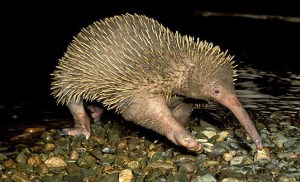 Echidna teaches us the value of focusing on the little things. Paying attention to the small details can make the bigger picture that much more successful and nourishing. Take the time to look closely at the matters around you.


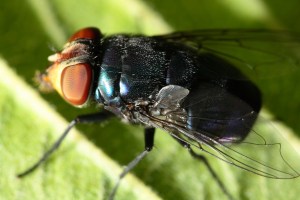 I quickly decided that blowflies are far from insignificant. They do make their presence felt! Blowflies have been deemed to be vehicles of death, decay and destruction; envoys of evil, sin and pestilence by the Christians. However, some African tribes celebrate a Fly-god, with the fly revered as an embodiment of the soul. As such flies are never killed.
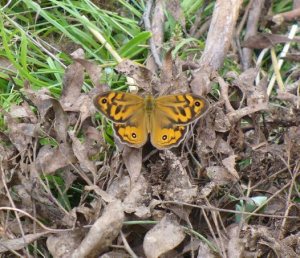 As I sat at Dog Rocks I noted the call of the Kookaburra and the footfall of rock climbers clambering to find places to test their skills. But it was the brown butterflies who danced around me and who led me to find a small magic circle, formed by ancient granite.
 After watching a Pelican, patiently perched on its nest at St Leonard’s, Victoria, on the Australia Day long weekend I have been encouraged to emulate this bird. Ted Andrews talks about Still-hunting in this classic book, Animal-Wise.
 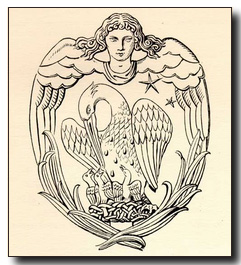 The elegant pelican animal totem is definitely an opportunist with style and finesse. In the wild, these large-billed birds perch themselves in the most advantageous position before swooping in to catch their prey. They wait patiently and focus intently, striking at the most perfect moment.
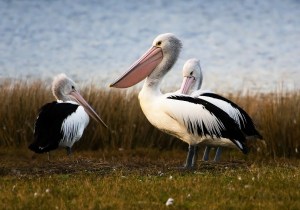 Despite their size pelicans are light and buoyant. They can float like a schooner. A pelican in flight can quite suddenly plummet into the water and then pop up to the surface. Its system of air sacs under the skin makes it unsinkable.
 Janganpa jukurrpa (Possum) travels all over Warlpiri country. Janganpa are animals that often nest in hollows of white gum trees (Wapunungku).

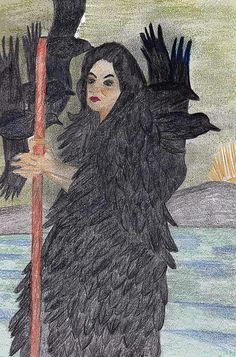 This practice reminded of a gift that I was given when I visited the
  Possum urges us to see our life as being built upon the foundation of our ancestors; to wrap ourselves within a cloak and find anchorage with our ancestors.


 Lorikeets are full of silliness and humour, and they are also inquisitive about their surroundings. These comical birds remind the writer and artist to be expressive and bring colour, humour and light into their work. Lorikeet has drawn me to examine Expressive Arts. Expressive Arts and Art Therapy are creative therapies. The concept of expressive art resonates for me because it honours the process, rather than the final product.
 Of all the facts about the Superb Fairy-wren’s life that have been discovered over the years, none is more charming than one small detail of the male’s courtship behaviour. While wooing a potential mate, either in his territory or in somebody else’s, a male Superb Fairy-wren will pluck petals from a flower and present them to the female as a kind of bouquet.


 While Waiting For Godot