When I bought my home in Castlemaine, seven years ago, the backyard had a few established plants but it was a harsh, unwelcoming environment. A new home was being built directly behind me and, being on a rise, my new deck overlooked theirs. I laughed and told them not to worry because I would soon obscure the view. I announced that soon there would be a woodland out there. Everyone was sceptical, but the woodland has materialized, and it is the home to many birds. I have created a green corridor!
Adjoining neighbours have both thanked me for creating this leafy space because they have both noticed the appearance of the superb fairy blue wrens, a bird that as ‘Birds Backyards’ says, needs protecting.
It is not actually easy being blue because the wren has to spend a lot of time watching for predators. However, the superb Blue Wren is at home where ever they are. They are charismatic songbirds who live in groups. They move about jauntily foraging for insects and larvae while maintaining their territories and use the energy of their little community to protect their territory and be aware of any danger. They teach you in how to be resourceful, let go and use flexibility when faced with intrusion or find opposition in life. They ask you, is it time to shift the way you are thinking and allow a change of perspective. (Source: Peacespace)
The Twelve Days of Christmas featuring Australian birds and animals is just one of my ways of helping Aussie birds and animals! Over the coming year, I am planning to spend more time playing, observing and raising awareness of the wisdom they have to offer the creative person.
Over 52 weeks I will be learning all about how to live and work creatively. My teachers are Aussie birds and animals. This week the creative force has produced the Superb Blue Wren to provide some lessons!
It is important to remember that we are here to work at living not, as some do, live to work. I sometimes think there is another life I might have lived!
I am thinking that, while I go on waiting for Godot to reveal what I am supposed to be doing, I will ask the creative force how we should play. We might just find some wild, playful activities! Anita Marie Moscoso engaged in some wild play with her family and they all appear to have had a lot of fun!
One day at a time! To begin, all I need to do is decide who I will be today! How will the creative spirit and I play today?
After trawling my Flickr file I am reminded that I have many aspects! I have been many people! Will I be a pirate, a belly dancer, a traveller arriving at the City of Ladies or a Ferry Woman preparing to take people to the Isle of Ancestors? Will I read my tarot or slip through a portal, travel the Dak road and find a secret cottage to stay in?
Turtle symbolizes both new beginnings and endings. It is the ending of something that allows space for something new to arise. This ending may be an outer circumstance or a change or shift that occurs within ourselves. There may be a sense of loss or even grief over what has passed and yet it is through the energy of Turtle who is very long-lived and thus very wise, that we can come to understand why something did need to leave our lives. Turtle can help lead us to that space where we can finally move on, to let go of what has been, celebrate it for the gifts it gave us and finally to turn and head for a new shore.
These drawings depict some aspects of who I have been. I have been an Enchantress, Sibyl Riversleigh and Ebony Wilder, the Riversleigh housekeeper who comes out as a pirate, and leads adventures around the Lemurian Archipelago. I have been the spirit of a volcano, an Abbess presiding over the Lemurian Abbey and the keeper of the alluvial mine.
Now I am simply Heather, artistic midwife, purveyor of creative stimuli! I am happy to travel alone but delighted to find companions as I travel. It is not particularly important where I finally come ashore.
As you set out for Ithaka
hope the voyage is a long one,
full of adventure, full of discovery.
Laistrygonians and Cyclops,
angry Poseidon—don’t be afraid of them:
you’ll never find things like that on your way
as long as you keep your thoughts raised high,
as long as a rare excitement
stirs your spirit and your body.
Laistrygonians and Cyclops,
wild Poseidon—you won’t encounter them
unless you bring them along inside your soul,
unless your soul sets them up in front of you.
Hope the voyage is a long one.
May there be many a summer morning when,
with what pleasure, what joy,
you come into harbors seen for the first time;
may you stop at Phoenician trading stations
to buy fine things,
mother of pearl and coral, amber and ebony,
sensual perfume of every kind—
as many sensual perfumes as you can;
and may you visit many Egyptian cities
to gather stores of knowledge from their scholars.
Keep Ithaka always in your mind.
Arriving there is what you are destined for.
But do not hurry the journey at all.
Better if it lasts for years,
so you are old by the time you reach the island,
wealthy with all you have gained on the way,
not expecting Ithaka to make you rich.
Ithaka gave you the marvelous journey.
Without her you would not have set out.
She has nothing left to give you now.
And if you find her poor, Ithaka won’t have fooled you.
Wise as you will have become, so full of experience,
you will have understood by then what these Ithakas mean.
Sometimes, when I need fuel injected creativity, I turn to a Tarot deck. This deck is far from complete, but there are some stories lying behind my version of the Tarot. 2010 was a traumatic year for me so there were many swords appearing in my drawings. Heather Blakey Pencil Drawings 2010
This is a collection of drawings I did while I was travelling, with a host of companions, in Lemuria. Many of these are self-portraits! Over a five year period, while my late husband was battling cancer, and often confined to bed, I spent my nights drawing, Looking at these drawing now I can see that I managed to capture the inner world that sustained me during those long years. After walking away from my life in the city, and reinventing myself, my pencils have lain idle! They served me well! Today I give thanks to them, and to all those who fearlessly travelled those Lemurian roads with my multiple personalities!
Heather Blakey
Pencil Drawings – Enhanced in Photoshop! 2005 – 2010
According to the definition provided by Hussein, a sensory garden is a garden where all components are carefully designed to provide maximum sensory stimulation (2011). The aim of these gardens is to heighten our awareness of our interaction with nature through our senses. This definition of a sensory garden encompasses awareness of all aspects of the garden, both vegetative and hardscape elements. The hardscape elements to be included in therapeutic gardens, including sensory gardens, are as important as the vegetative elements because they become an integral part of the overall experience. For example, paths, walls, seating and signage all allow access, inclusivity and interactivity within the garden. From Therapeutic Gardens
Since moving to this home in 2010 I have worked intuitively, using my senses, to create two quite distinct gardens. The front garden has elements of what Nana would have planted in her 1960’s garden while the exposed, harsh backyard has been transformed into a woodland that attracts a rich variety of birdlife.
Bush songs devised by ordinary, everyday people are a record of the people’s experiences of living, surviving and dying in the bush, as well as the colourful slang of bush life.
Today, on my way back from meeting a friend at Malmsbury for lunch, I saw a sign, that I had never noticed before, pointing to the Elphinstone Cemetery. It was quite a trek, along an unsealed road, to find this well maintained old cemetery. At the time when it was established in Elphinstone, there would have been more bush to be seen. Today you pass by properties on acreage!
What is it about ‘the bush’ that is so special to Australians? The bush has an iconic status in Australian life and features strongly in any debate about national identity, especially as expressed in Australian literature, painting, popular music, films and foods.
The bush was something that was uniquely Australian and very different to the European landscapes familiar to many new immigrants. The bush was revered as a source of national ideals by the likes of Henry Lawson and Banjo Paterson. Romanticising the bush in this way was a big step forward for Australians in their steps towards self-identity. The legacy is a folklore rich in the spirit of the bush.
Many Australian myths and legends have emanated from the bush. Early bushranging – ranging or living off the land – was sometimes seen as a preferred option to the harsh conditions experienced by convicts in chains. Later bushrangers such as Jack Donohue, Ben Hall and Ned Kelly were seen as rebellious figures associated with bush life. Their bushmanship was legendary as well as necessary. Source: The Australian Bush
For years it was known as the Pearl of the Orient. Then Penang lost its lustre, at least to the outside world as its importance on the globe’s trade routes lessened. But now, thanks to its unique architecture, fabulous cuisine and heady mix of tourist attractions, the famed city is bouncing back big time.
The Protestant Cemetery in Georgetown is the oldest Christian cemetery in Penang. Not far from the Eastern & Oriental Hotel, it is also called Northam Road Cemetery and was set up in the 18th-century for British colonial administrators, traders and missionaries that arrived after Penang’s establishment in 1786.
The Protestant church’s earliest grave is that of Captain Francis Light (one of the fathers of British colonialism in Southeast Asia). Other graves include those of James Richardson Logan (editor of the Penang Gazette) and Reverend Hutchings (early leader of St. George’s Church and founder of the Penang Free School). Movie buffs will be interested to know that Thomas Leonowens is buried here: he was 31 years-old when he passed away in 1859, leaving his widow stranded in the East. He was the husband of Anna, the self-same Anna of The King & I or Anna & the King fame.
While my daughter and I were holidaying in Georgetown this year we had a great rickshaw driver who made sure that we gained full benefit of the charm of this multi-cultural city. Before the heat engulfed us we arrived at this hauntingly beautiful cemetery. Our driver informed us that this is one of the oldest Christian cemetery of its kind, not only in Penang, but in the whole world, pre-dating even Paris’s Père Lachaise Cemetery, England’s Highgate Cemetery where Karl Marx is interred and even Vienna’s Zentralfriedhof, the largest cemetery on Earth. This is no Zentralfriedhof! Penang’s Old Protestant Cemetery is quite small—less than a block across. But what it lacks in size, it makes up for in character. A grove of gnarly frangipani trees covers the burial ground, graceful stone tombs in varying state of decay strewn across its grassy bed.
Sir Francis Light is arguably the most famous resident of the Old Protestent Cemetery, but his tomb does not stand out among others that are taller or grander than his. In 1786, he leased the island of Penang from the Sultan of Kedah on behalf of the British East India Company and thus ushered in centuries of British colonization in Southeast Asia. Light lived here for eight years before succumbing to malaria.
He left behind his common-law wife, Martina Rozells, and four children. Martina was Catholic, and marrying a Catholic was cause for dismissal from the British East India Company. So, he never officially declared themselves as married. Rozells ended up losing her entire inheritance to Light’s business partner since their union was not recognized by the church. Their son, Sir William Light, was the first Surveyor General of South Australia and is responsible for choosing the sight for and designing the layout of its capital, Adelaide.
When I created all those Advent Calendars ten years ago I used Dreamweaver and the site was static. Community members communicated using Yahoo groups. The interactive nature of Web 2 has changed all of this and now it is possible to comment on the gallery images as they go up. Lori Gloyd has been one of the first out of the starting blocks this year. She remembers one April day, back in 2006, when she stumbled upon Soul Food and recalls how she began blogging. Lori really was one of the invaluable members of the Soul Food community. Her enthusiasm was contagious, he work exemplary and she was always supportive of other community members. Do take the time to check out Pelican’s Perch, the site which she created during those heady Soul Food days.
There will be lots of activities provided. Obviously not everything will appeal. However, I would love to see folk engaging here and posting any feedback on this site as well as on Facebook.
Keep an eye out for the day when you are encouraged to take photos of street art. This photo was taken in Georgetown, Penang.
Back in the day, when I ran the Soul Food Cafe, come December, everyone eagerly anticipated the launching of a new Advent Calendar. I launched the first, Made in Australia, calendar in December 2004. From 2004 to 2010 I launched a number of features that showcased the work of artists who inhabited the cafe and offered activities for those who came to visit each day. You will find these scattered throughout Soul Food.
After being thrown some curve balls I walked away from my life, moved out to regional Victoria, resettled and began to reinvent myself. The internet has transformed since those early days and the virtual world I explored seventeen years ago is now heavily populated. While I have no desire to be noticed in the vast crowd I have kept my hand in. I run web publishing courses in my local community and enjoy seeing the sites people make.
While Waiting for Godot is the special place I come to when I am not working on essays for my Masters of Social Work (Qualifying). The university year is over and it is December tomorrow. I have decided to experiment and try setting up a simplified Advent Calendar using blogging technology. My original ones did not enable comments. I used Dreamweaver to make them.
This 2017, While Waiting for Godot Calendar is meant to be a bit of fun. Each day a new image will appear in a gallery. The caption will include links to activities, designed to amuse me while I wait for Godot and decide what I will do next. Enjoy!
In the first few years of the colony, mortality was very high, but the common childhood infections were absent until the 1830s. From the 1880s, there was a sustained decline in mortality from communicable diseases, and therefore in aggregate mortality, while maternal mortality remained high.
Some details included with photos.
The squares upon which the cross is mounted record the deaths of three children. John died in 1911, aged 12. Ellen drowned in 1918 aged 9 and Mary died at 12, cause not listed.
A moving family monument at Sandon, Victoria. Parents buried alongside children who pre-deceased them.
Vaughan Cemetery! While the parents lived to an old age they lost three children.
Note the death of Mary at 24 and her two children aged 2 and 7 months within a year of one another
After the loss of her daughter one can only speculate that the loss of her son in the Great War led to her death of this Moliagul mother
Walket and Mary buried with their infant son
Moliagul. An infant sister!
Grandchild lying alongside grandfather Sandon
Infant! A simple, yet beautiful water memorial that incorporates an angel in the water feature.
Child’s grave at Pennyweight where 200 children who died during the gold rush were buried.
The two young children who lie here, Annie and Henry Clifton, died in a fire in Spring Gully.
A particularly poignant stone records the death of a mother after child birth, along with the baby, another infant and 5 year old twins
I am sure you remember the Choose Your Own Adventure books, where you’re chased by a tiger. You can escape it by leaping into the ocean 50 feet below (go to page 48) or face the tiger with your homemade slingshot (go to page 128).
Akari (my Mazda 3) loves driving through roads with avenues of white-trunked eucalypts. Side roads beckon! It is hard for her to resist them. However, while she could be talked into some sophisticated adventuring, Akari is no risk taker. For the moment she finds it is exciting enough to explore hidden valleys and go down unmade roads that are not only reserved for four-wheel drives.
Akari and I were out messing about today and we wandered along out of the way, an unmade bush road called Providence Gully Road. When we turned off the road, along another unmade road, to head towards civilisation, we came upon this rather dramatic entrance to a property. We thought this might be just the setting to write your own adventure.
The gate is open!
You take the time talk to all the bones and heads that are decorating the gate to learn more about what really lies within.
OR
Thinking that Baba Yaga may live here and give you the creative fire you decide to ignore all the DO NOT ENTER signs and step through the portal into this private world.
OR
Because you are so imaginative you think of something else!
Melissa Pilakowski puts forward a fun version of writing your own adventure using Hamlet as a kick starter.
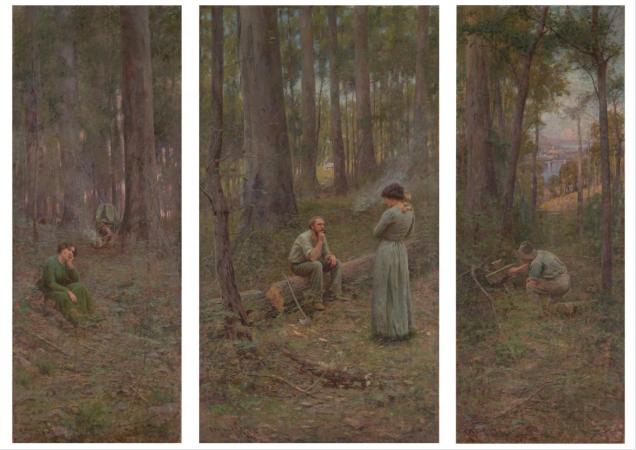
Henry Lawson’s The Drover’s Wife is an Australian classic that depicts life for the early Australian pioneers. McCubbin’s monumental painting The pioneer reflects the self-conscious nationalism of the years immediately following Federation. Each panel is ‘read’ to link the progress of toil on this land across time.
The first panel shows a pioneering couple in their new bush environment: the man is lighting a fire to boil the billy, while the woman contemplates their future life. The second panel shows the couple several years later: the woman holds a baby, land has been cleared and a small house has been built. In the final panel a bushman discovers a grave, and in the background a city begins to emerge. It is uncertain who has died and whether the male figure is the pioneer, his son or a stranger. By presenting his painting across three panels – the triptych format for traditional religious art – McCubbin elevated the status of the pioneer within Australian art history.
The pioneers who came to Central Victoria are honoured in various ways. Less marks the lives of those people who lived on the land that was not actually empty when Europeans first arrived.
In memory of Fryerstown Pioneers
This installation, at the Vaughan Cemetery, was gifted by the artist in memory of her pioneering ancestors who, like couple, sacrificed so much and contributed to shaping the township of Vaughan. She also pays respect to the Dja Daj Warring, the first people who lived here.
Workers and players have earned their repose. Soon on their names all in vain we shall call, For even the grandest old landmarks must fall. Just a warm hand-clasp ere one disappears— These are the last of the old pioneers. John Sandes
Sandy Creek Road
Sandy Creek road
Sandy Creek Road
Sandy Creek Road
Turn off the Castlemaine to Maldon road onto the gravel Sandy Creek road and follow the old Cobb & Co route, past the old hotel, where they stopped for a break and drive on towards Welshman’s Reef through Box-ironbark country.
Welshmans Reef is a former gold mining town 15 km west of Castlemaine and 110 km north-west of Melbourne. The name presumably came about from a Welshman discovering the gold-bearing reef: there were numerous Welsh and Methodist settlers at neighbouring townships such as Fryerstown and Vaughan.
West of Welshmans Reef there were the Loddon flats, which enabled miners to diversify into farming. A school was opened in 1877. The place was seldom more than a hamlet and its peak pre-twenty-first-century census population of 215 persons was in 1915. In 1956 the Cairn Curran Reservoir was completed, inundating much of the river flats.
As you approach the hamlet a sign points to the old Sandy Creek Cemetery, a cemetery that was closed in 1956. Many pioneers who came seeking gold lie here. Noting our arrival a large mob of kangaroos took off, bounding across the creek.
The sight of so many small white, numbered markers, combined with the fact that there were only a few headstones, took my breath away. Memorials placed by descendants revealed that this is a place to honour the pioneers who came here.
Formerly Sandy Creek Cemetery. No burials here since 1952
Now that I am the age I am I totally get why my parents enjoyed their Sunday drives. Mum would fill the cake tin, make a flask of tea and out we would go. Mum and Dad regularly explored the rabbit warren of our immediate world in Gippsland. Now, like them, I have become addicted to wandering, just having a look see. You never know what you will see if you just open your eyes and look. You never know what you will conjure unless you are prepared to dream.
Even though MIDNITE was seventeen, he wasn’t very bright. So when his father died, his five animal friends decided to look after him. Khat, the Siamese, suggested he became a bushranger, and his horse, Red Ned, offered to help. But it wasn’t very easy, especially when Trooper O’Grady kept putting him in prison.
So it was just as well that in the end he found GOLD!
Midnite, by Randolph Stow, is a brilliant good-humoured and amusing history of the exploits of Captain Midnite and his five good animal friends who lived in a hidden valley!
Australian Bushrangers like Captain Midnite, or Captain Starlight, as depicted in the classic Robbery Under Arms were fond of hiding places in out of the way valleys like this one beyond Yandoit. I am not likely to take up bush ranging but if I found some GOLD I would look for a place, tucked in a very private little valley, just like this, and create an art sanctuary for wandering creatives.
Last night, or maybe it was early this morning, Jack Frost, the master etcher, made an ice etching for me, leaving it, for me to find, in a metal bucket on my deck. “All who see it are astounded and think it must be the work of spirits”. In awe I asked the master etcher “What is your secret?”
The Woodcarver
Khing, the master carver, made a bell stand
Of precious wood. When it was finished,
All who saw it were astounded. They said it must be
The work of spirits.
The Prince of Lu said to the master carver:
“What is your secret?”
Khing replied: “I am only a workman:
I have no secret. There is only this:
When I began to think about the work you commanded
I guarded my spirit, did not expend it
On trifles, that were not to the point.
I fasted in order to set
My heart at rest.
After three days fasting,
I had forgotten gain and success.
After five days
I had forgotten praise or criticism.
After seven days
I had forgotten my body
With all its limbs.
“By this time all thought of your Highness
And of the court had faded away.
All that might distract me from the work
Had vanished.
I was collected in the single thought
Of the bell stand.
“Then I went to the forest
To see the trees in their own natural state.
When the right tree appeared before my eyes,
The bell stand also appeared in it, clearly, beyond doubt.
All I had to do was to put forth my hand
and begin.
“If I had not met this particular tree
There would have been
No bell stand at all.
“What happened?
My own collected thought
Encountered the hidden potential in the wood;
From this live encounter came the work
Which you ascribe to the spirits.”
– Chuang Tzu from The Way of Chuang Tzu by Thomas Merton
An entire past comes to dwell here! Gaston Bachelard ‘Poetics of Space’
In the summer of 2011, on the Ardnamurchan Peninsula on Scotland’s west coast, excavations revealed the only known Viking boat burial to be excavated on the British mainland in modern times. The vessel survived in the form of more than 200 rivets, many in their original location, and indicated a small clinker boat. It contained a sword, an axe, a spear, a ladle, an Irish bronze ring-pin and the bronze rim of a drinking horn. These items indicate that it was a remarkably rich Viking boat burial of a warrior. Positioned beside the warship Roskilde 6, the Ardnamurchan boat burial represents the final journey of a Viking warrior, sailing into the afterlife. Source: A History of the Viking World
An African proverb says that ‘when an old man dies, a library burns to the ground’.
Here at the Glenlyon Cemetery there may not be a rich treasury of artefacts, but rich memories lie here. One grave holds an image, perhaps created by the lad who died, forever young, who is mourned by his family.
Another tombstone in the Sutton Grange Cemetery includes images of a young lad skiing. A photo of his beloved dog watches over him. Nearby the crystals, of ‘a woman with a gentle soul’ are mingled among the stones of a beautiful modern memorial.
If we look at it intimately, the humblest dwelling has beauty!
This house, as I see it, is a sort of airy structure that moves about on the breath of time. It really is open to the breath of another time. Bachelard ‘Poetics of Space’
In an age of so much homogenised space, so much shoddy, cramped, dimly lit, low ceilinged space, these resting places offer a fresh way of interpreting and understanding space. In an era suffused by television and video games, fluorescent lighting and plastic floors, air conditioning and badly built houses these memorials demonstrate the poetry of space and love.
from forward to ‘The Poetics of Space’ written by John R Stilgoe
Fryerstown
Fryerstown
Infant! A simple, yet beautiful water memorial that incorporates an angel in the water feature.
If I were asked to name the chief benefit of the house, I should say the house shelters daydreaming, the house protects the dreamer, the house allows one to dream in peace.
All inhabited space bears the essence of home.
Gaston Bachelard
This Sutton Grange Cemetery enjoys scenic views across to Mount Alexander and the green stone quarry of special significance to the aboriginal people who first lived here.
What used to be a thriving town during the prosperous days of the early 19th century, Sutton Grange has now been reduced to a population of around 150 people, after a typically devastating Australian bushfire ravaged the town, burning down most of the area’s established civic buildings and homes, and leaving behind nothing but scorched earth on the land that remained. Today, the town survives off the back of a few determined farming families who raise sheep and cattle, breed thoroughbred horses, and grow wine.
The Glenlyon Cemetery is another quiet, beautifully maintained, peaceful space.
Infant! A simple, yet beautiful water memorial that incorporates an angel in the water feature.
Inexplicably, driving with Akari out to Moliagul, photographing an old thunder box (outdoor toilet) and a long abandoned house, filled me with the urge to wander further with my dogs sniff mapping. It made me think of swagmen and the much loved Waltzing Matilda.
Once a jolly swagman camped by a Billabong
Under the shade of a Coolabah tree
And he sang as he watched and waited till his billy boiled
“Who’ll come a-waltzing Matilda with me?”
Down come a jumbuck to drink at the water hole
Up jumped a swagman and grabbed him in glee
And he sang as he stowed him away in his tucker bag
“You’ll come a-waltzing Matilda with me.”
Up rode the Squatter a riding his thoroughbred
Up rode the Trooper–one, two, three
“Where’s that jumbuck you’ve got in your tucker bag?”
“You’ll come a-waltzing Matilda with me.”
But the swagman he up and jumped in the water hole
Drowning himself by the Coolabah tree,
And his ghost may be heard as it sings in the Billabong,
“Who’ll come a-waltzing Matilda with me?”
–from “Waltzing Matilda” by Andrew Barton “Banjo” Paterson, 1895.
“Advance Australia Fair” was proclaimed as Australia’s national anthem, replacing “God Save the Queen,” on 19 April 1984. If you ask an average Australian to sing the national anthem chances are that they will recite only the opening lines. However, if you ask an average Australian to sing “Waltzing Matilda” it is almost certain that they will sing about the swagman [1] who stole a jumbuck [2] and fled from the troopers [3] with some flourish.
“Waltzing Matilda,” Australia’s unofficial anthem, is known and loved all over the world and, arguably stands alongside” The Star-Spangled Banner” or ” La Marseillaise” as a song capable of arousing deep national pride. The strains of “Waltzing Matilda” consistently bring a tear to the eyes of Australians far from home, Australians who, like the late Peter Allen, still like to call Australia home.
Where did the song originate? Why do Australians find “Waltzing Matilda” so unutterably poignant? What do the words mean? Why are Australians moved by the escapades of a petty criminal?
‘Waltzing Matilda’ is credited to Andrew Barton (Banjo) Paterson (1864 -1941). Banjo Paterson was a lawyer by profession and lived and worked in Sydney Australia. Although Paterson was a city slicker who hailed from the urban fringes of Australia, he was, like so many of his ilk, enchanted by the Australian bush and outback. Paterson is purported to have been travelling with his fiancée in central Queensland, about 1,500 km north of Sydney when he wrote the song. The couple are said to have spent a few weeks at Dagworth Station, a vast outback station near Winton in Queensland. It was at Dagworth that Paterson is said to have met Christina MacPherson, whose brother managed the station at the time. One yarn [4] suggests that it was Christina who inspired Banjo with a whimsical, dreamy rendition of the tune ‘Craigeelee’, a score which provided the basis for ‘Waltzing Matilda’
The expression ‘waltzing matilda’ is believed to have German origins. Handolf, near Adelaide was just one of the many German settlements that sprang up in Australia once free immigrants began to arrive and German expressions quickly made their way into the vocabulary. It is almost certain that the title of Paterson’s ballad came from the expression Auf die Waltz gehen, that means to take to the road. The term harks back to the Middle Ages when apprentices were required by their master to visit other masters before their release could be secured. Later a ‘matilda’ was given to female camp followers who accompanied soldiers during the Thirty Year War in Europe and was common place during World War One.In the context of the song ‘Waltzing Matilda’ the ‘matilda’ was a pack that swagmen carried, filled with things tho keep them warm at night. To waltz with matilda literally meant to travel, to dance from place to place in search of work, with one’s belongings wrapped in a grey blanket. [5]
Paterson, like most Australians who lived in the cities, was fascinated by stories of the hostile, arid outback. Deaths in the outback were well publicized. Deaths on the track were a common occurrence and it is likely that the fate of travelers would have been a subject of conversation of an evening while Paterson was at Dagworth. Stories of those that perished would have been told along the bush telegraph, shared over dinner, acting as a cautionary tale for the foolhardy. For example, one story that drifted down the bush telegraph told of the fate of Seymour Hamilton, a nineteen-year-old, two years out from England. He left Tinga Tinagans for Coongie but never arrived. Subsequent searches found his packsaddle and swag. He was believed to have died of thirst and, when his bones were finally found, they had been scattered and gnawed by dingoes.
Another formative influence on Paterson may have been the story of an incident that actually occurred at Dagworth. an incident on the property that must have become known to him during his stay. On 1 September 1894, a mere four months earlier, shearers had set the Dagworth woolshed ablaze, cremating a hundred sheep. MacPherson and three police troopers had pursued the shearers. [6]
It is almost certain that Banjo Paterson threaded together events such as these when he conjured up “Waltzing Matilda”. But why has the story endured? How has “Waltzing Matilda” made its way into the Australian psyche?
Modern Australians may live predominantly in urban zones but this does not lessen the call of the outback, the lure of the bush, or lessen their need to hear yarns of pioneering ancestors who left Old England’s shore, picked up lumps of gold [7] and went on to build a nation on the back of the sheep. Australian stories and art that have endured are invariably set in the bush and involve the triumph of the underdog.
The setting of “Waltzing Matilda” is enough to fuel a deep yearning within Australians to escape from the concrete cities of the urban fringes. To travel the outback, with my swag all on my shoulder, to witness the stark beauty and isolation of this most ancient of lands, to lie beneath the Southern Cross, to smell the unique perfume of the eucalypt, is a dream, a quest that sends thousands of wanderers towards the red centre each year, in search of just such a place. To lie while the billy [8] boils, to dream by a billabong [9], under the shade of a Coolabah tree is akin to finding the eternal Garden of Eden.
Moreover, “Waltzing Matilda” builds support for the underdog and creates a hero out of a gutsy, destitute man. The hapless swagman in this story was one of thousands of unemployed men who tramped around the Australian bush during the mid nineteen eighties, usually coming to sheep stations at sunset to ask for supper and a bed, when it was too late to work. (Sometimes called a Sundowner because they arrived at sundown when it was too late to be expected to work.)
We can only speculate, but it is more than likely that, having been refused supper or a bed, the swagman of “Waltzing Matilda” fame, camped for the night by a billabong, under the shade of a Coolabah tree [10] meditating upon where his next meal was to come from. The squatter and troopers, who swooped down upon this swaggie, demanding that he give up the jumbuck, represent despised wealth and authority. It is no coincidence that the Squatter is riding a thoroughbred horse and that he brings not one, but three troopers to help retrieve his stock. The swagman’s defiance touches a deep anti-authoritarian archetype that springs from the days of the Eureka Stockade, The First Fleet, the Rum Corps and the personal history of those early convicts who were transported to Australia for petty crimes.
The early Australian settlement was confined within the curves of the Blue Mountains and as the settlement grew, free settlers arrived explorers sought new land for grazing. People ‘squatted’ on patches of land, grazed their animals, grew their crops and built their houses and fences. In good quality grazing country squatters claimed vast areas and became wealthy. The term ‘squattocracy’, a term blended from the word ‘squatter’ came to be associated with ‘aristocracy’. The police worked with them to maintain law and order and to protect their holdings. Consequently, squatters were an object of resentment.
The pastoralist/squatter’s reluctance to mete out food, his need to protect his flock is understandable given the swarms of penniless, badly clothed men wandering discontentedly from hut to hut and station to station, but the crime of the swagman in this story seems petty! A hungry, destitute man, down on his luck, steals one sheep on a sheep station with a flock of thousands. This is hardly a hanging offence, any more than stealing a loaf of bread warranted transportation.
Apart from the anti-authoritarian overtones there is no doubt that “Waltzing Matilda” romanticizes the larrikin quality of the jolly swaggie, jumping with glee. Who can resist this rascal’s charm? A character, unique, fiercely independent, the swagman is not to be patronized. It is his free spirit that sends him to a watery death and haunts Australians as his ghost may be heard, singing in the Billabong. The swagman, like Joan of Arc, never dies. They cut out Joan’s heart and thought that this was the end of her but she lives on. Similarly the ghostly figure of the unnamed Swagman has eternal life, representing a freedom of movement and thought that many Australians now take for granted.
At day’s end, “Waltzing Matilda” is poignant because of the combination of characteristics that sum up so much of Australian spirit and life. “Waltzing Matilda” reminds us of our ancestral history, defines nationhood and fills Australians with a sense of pride that the country was built by people who had been deemed dregs, but who were courageous and innovative and built something from nothing. The ghost of the swagman may be found in the faces of the pioneers who settled the Never Never; in the eyes of the hardened shearing unionist who paved the way for Unionism in Australia; within the defiance of the Anzac storming the beaches of Gallipoli; in the stride of the Bondi life-saver and in the face of the determined protestor thumbing his nose at government officials and bureaucracy.
Australians will never fully accept “Advance Australia Fair” as their national anthem because it is the song of a city-based intellectual, full of stilted language that paints Australians as something they are not. Australians will always respond to “Waltzing Matilda” because “Waltzing Matilda” has moved from being a bush ballad to a creation myth, a yarn told in a language now almost as unfamiliar as Latin, a glorious romantic tale that helps to identify and separate Australia and Australians from every other country, every other people on the globe.
[1] A gentleman of the road, an itinerant roaming country roads, a drifter, a tramp, a hobo. Carried his few belongings slung in a cloth, which was called by a wide variety of names, including ‘swag’, ‘shiralee’ and ‘bluey’.
[2] A sheep: aboriginal word meaning white cloud.
[3] A cavalry soldier, or perhaps a mounted militia-man or policeman.
[4] an Australian story.
[5] From the Web site: About Waltzing Matilda, Senani Ponnamperuma, 1996, 1997.
[6] From the Web site: About Waltzing Matilda, Senani Ponnamperuma, 1996, 1997.
[7] This is in reference to the Gold Rush which saw an influx of gold seekers to towns like Ballarat.
[8] A can or small kettle used to boil water for tea.


 Adjoining neighbours have both thanked me for creating this leafy space because they have both noticed the appearance of the superb fairy blue wrens, a bird that as ‘Birds Backyards’ says, needs protecting.


 While my daughter and I were holidaying in Georgetown this year we had a great


 I am sure you remember the Choose Your Own Adventure books, where you’re chased by a tiger. You can escape it by leaping into the ocean 50 feet below (go to page 48) or face the tiger with your homemade slingshot (go to page 128).




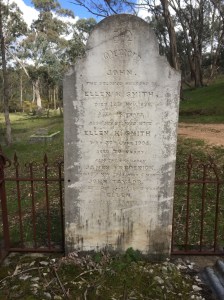 This installation, at the Vaughan Cemetery, was gifted by the artist in memory of her pioneering ancestors who, like couple, sacrificed so much and contributed to shaping the township of Vaughan. She also pays respect to the Dja Daj Warring, the first people who lived here.


 Even though MIDNITE was seventeen, he wasn’t very bright. So when his father died, his five animal friends decided to look after him. Khat, the Siamese, suggested he became a bushranger, and his horse, Red Ned, offered to help. But it wasn’t very easy, especially when Trooper O’Grady kept putting him in prison.


 An African proverb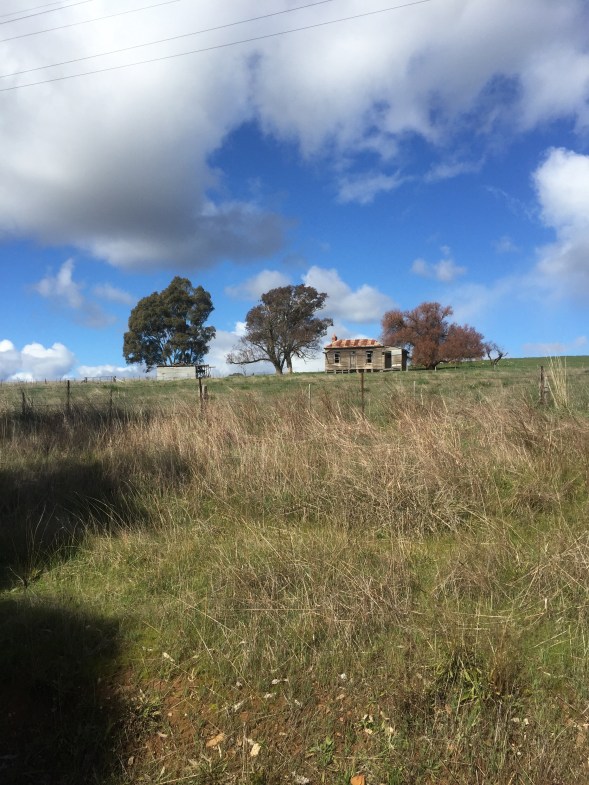


 Once a jolly swagman camped by a Billabong
 While Waiting For Godot